
Bushfire Management Activity: Planned Hazard Reduction Burn
Context: Coastal township within forested bushfire-prone landscape
Planned hazard reduction burning was undertaken in and around the Peaceful Bay township as part of a coordinated bushfire risk management program for the area.
The purpose of the burn was to reduce available fuel loads, improve defendable space around the township, and limit the potential intensity and spread of future bushfires impacting residents, visitors, and key access routes. The activity formed part of a broader, risk-based approach to bushfire management consistent with Department of Fire and Emergency Services (DFES) principles.
Burning was scheduled during suitable weather conditions to ensure fire behaviour could be safely managed and objectives achieved. During the operation, smoke impacts were expected, and temporary restrictions were applied to activities such as camping and solid fuel cooking in line with seasonal fire danger requirements.
Clear signage was installed at key entry points to the township to inform the community and visitors of:
- The fire danger period
- Restrictions on camping and cooking fires
- The timing and purpose of hazard reduction activities
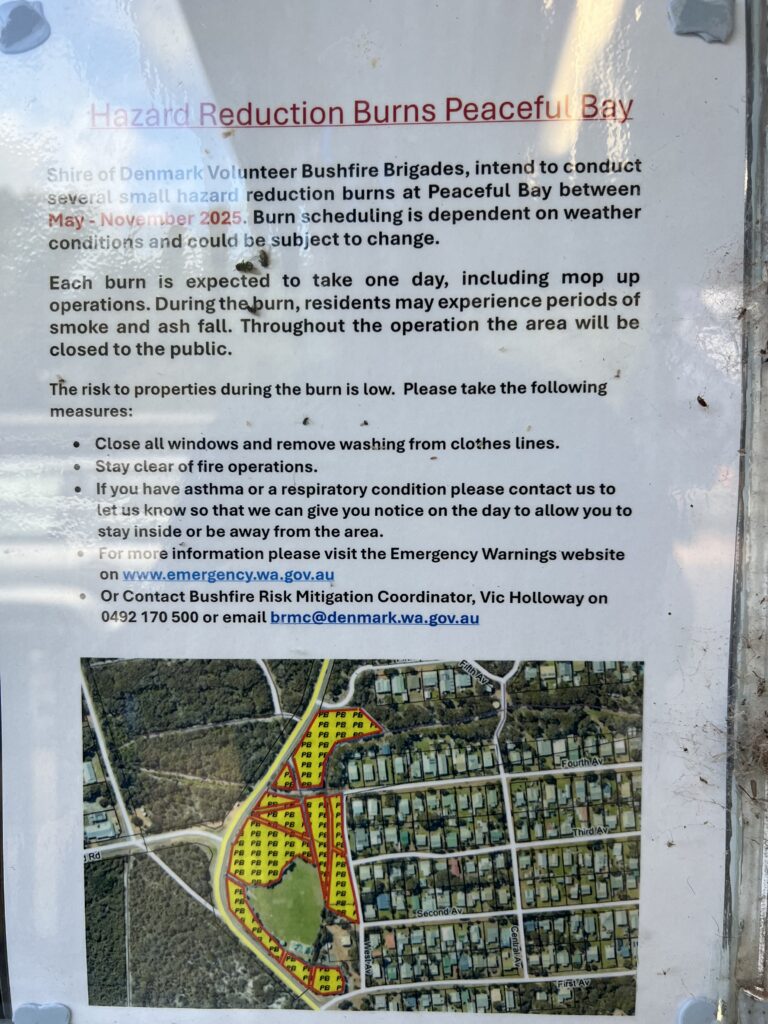
These controls supported community safety while enabling DFES and supporting agencies to safely implement the burn.
Blackash Bushfire Consulting recognises hazard reduction burning as a critical tool in managing bushfire risk in high-exposure coastal and forested communities. When undertaken under appropriate conditions, planned burns reduce the likelihood of uncontrolled bushfire impacts while maintaining a balance between safety, environmental considerations, and local amenity.
This case study demonstrates the importance of early communication, clear on-ground messaging, and risk-based decision-making in achieving effective bushfire mitigation outcomes for regional communities in Western Australia.


