
Designing for the fireground, not just the approval
Bushfire resilience is not achieved at the planning desk alone — it is proven on the fireground.
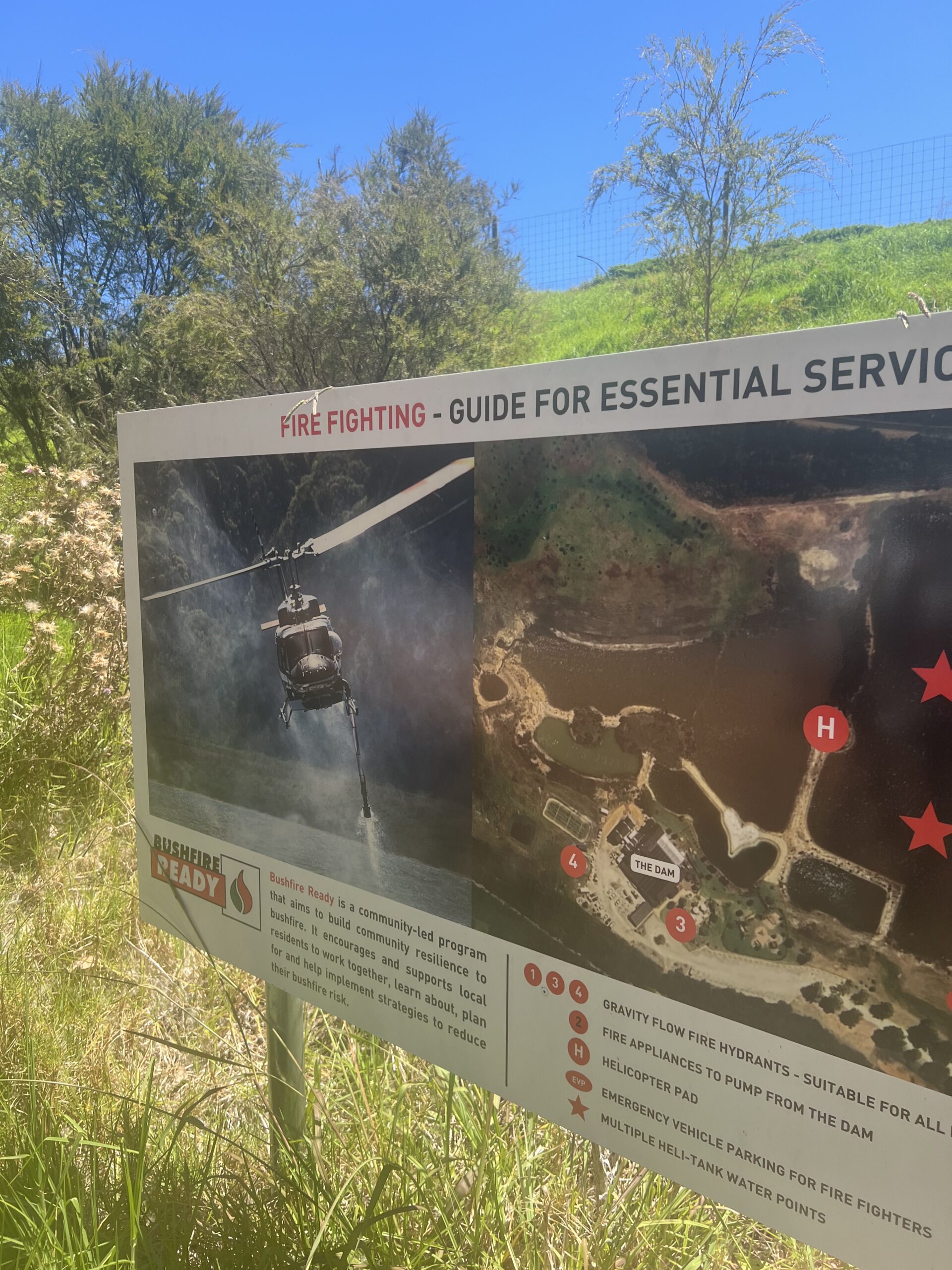
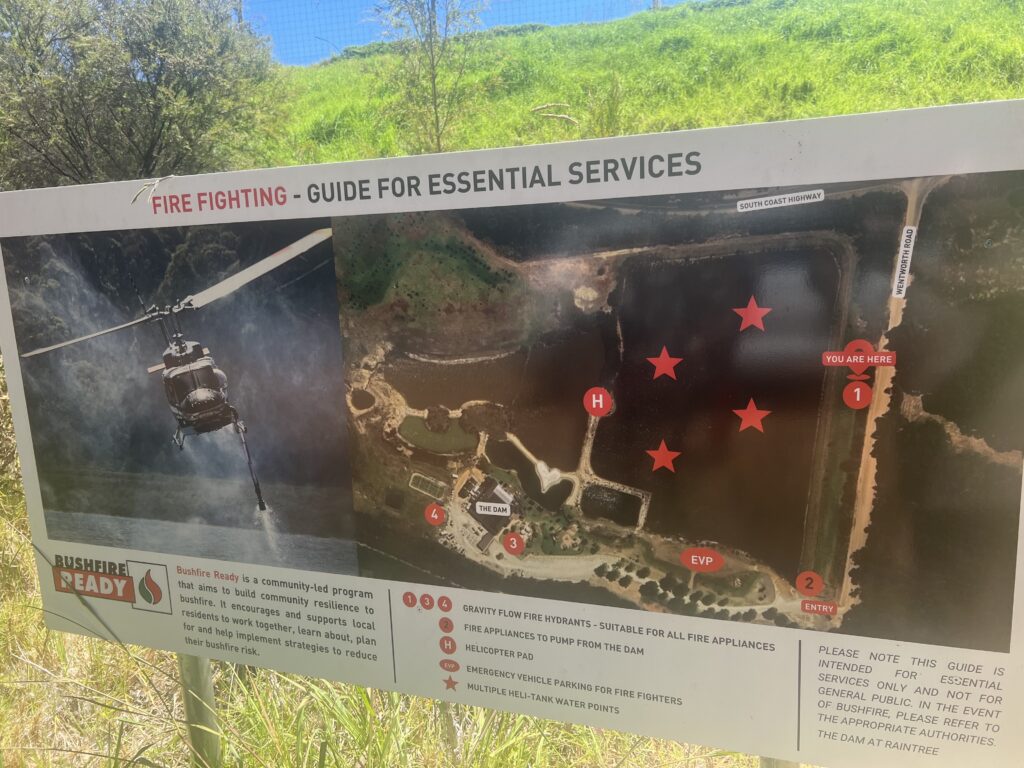
This Essential Services Guide demonstrates how a rural business in Denmark, Western Australia has embedded fire-fighting intelligence directly into the landscape. Clear, permanent on-site mapping ensures that responding fire crews can immediately identify access routes, water supply infrastructure and aerial firefighting resources when time matters most.
The guide clearly identifies:
- Gravity-fed fire hydrants and reliable water supply points
- Pump access locations suitable for fire appliances
- Helicopter landing areas and aerial water fill points
By providing this information on-site, in a format designed for operational use, the landowner has materially reduced response time, improved firefighter safety and enhanced the effectiveness of both ground and aerial suppression operations during bushfire and emergency events.
This is bushfire planning translated into real-world capability.
What New South Wales Could Learn
In New South Wales, bushfire documentation is typically prepared to satisfy planning approval and regulatory compliance requirements. Once approved, this information is rarely made available in a form that is directly usable by firefighters during an active incident.
NSW does not currently require:
- On-site fire-fighting guides or operational maps
- Permanent signage identifying water supplies and access for fire appliances
- Fireground-ready information tailored to aerial firefighting operations
As a result, critical site-specific intelligence often exists only in approval documents — not on the ground, where it is needed most.
This Western Australian example highlights a more effective, firefighter-centric approach: one that recognises that bushfire resilience is not just about meeting minimum standards, but about supporting safe, rapid and informed decision-making under emergency conditions.


